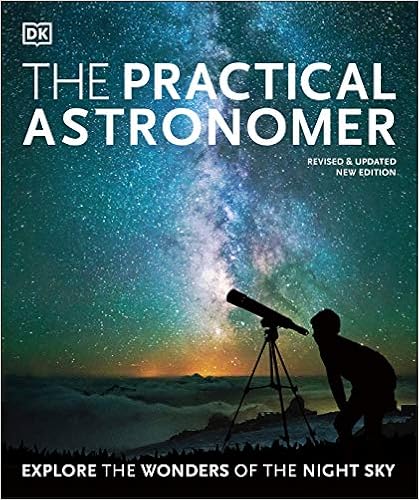
Book Review: The Practical Astronomer by Will Gater and Anton Vamplew
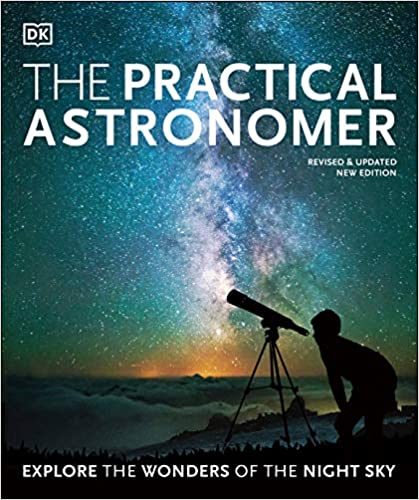
TLDR:
We give The Practical Astronomer a 5/5 for beginners, but the expert astronomer could live without it on their bookshelf and be perfectly happy.
When this book arrived in the mail, I quickly thumbed through it and had some skeptical thoughts. It has grown on me since then, and I speak for everyone here at AstronomyScopes.com when I say that we think this is one of the best beginner books for astronomy out there.
Why did I sneer at it on first glance, and what’s so great about it for the budding astronomer? Read on to find out.
At a Glance
About half of this volume is filled with star maps. Since star maps tend to be pretty easy to find otherwise, this is hardly necessary, especially to someone who already has a couple.
I was looking at the book through the eyes of someone who has been around the block a couple of times, however, and my snootiness was unwarranted and not very fair in retrospect. A new astronomer probably doesn’t have a star map beyond the basic planisphere that probably came with their telescope.
We recommend of course that everyone get a copy of Stellarium software (links below for mobile apps). It is free after all. But who wants to lug their laptop out to the observing site. Sounds like a good idea on paper, but the reality is that the great outdoors at night is not a good place for an expensive laptop.


Let’s face it. For learning basic constellations, planispheres can be pretty cool, but they are no match for a proper star map or the experience of learning to read one.
The other thing that really sent my bell ringing was that there were about three pages on astrophotography. Personally, were I the author, I would have left that out completely. I understand that
everyone wants to take selfies through the telescope, but astrophotography is a complex subject that warrants a small library of information.
Still, three pages? To me that is just setting someone up for failure, so why bother?
Why The Practical Astronomer is Possibly the Best Astronomy
Book for Beginners
Despite the shortcomings, the book is formatted really well, making it easy to read as well as informational.
Each paragraph is a little nugget of great information for someone new to viewing the sky.
We also liked the flow and progression. Most of us here started our trail to astronomical wisdom by looking up at the sky on clear nights and taking in the beauty of the cosmos with the naked eye, and Gater seems to be a believer in that philosophy.
From naked eye observing to binoculars to scopes, and then touching (annoyingly briefly) on astrophotography.
This book lays out a perfect prescription for how astronomy should be learned for maximum enjoyment and the development of a lifelong hobby. It all starts by looking up at the stars.
The supplemental star charts are more than just filler material. They are actually pretty comprehensive for what can be seen by the newcomer with entry-level equipment, and a terrific way to learn the sky.
That said, would this book be a serious contribution to a seasoned astronomer? Probably not, and that’s part of the reason that it doesn’t come up as much as some other books on the topic during discussion.
But for the beginner, or especially someone just getting started, The Practical Astronomer is a great introduction to astronomy that covers all the basics and delivers them in an easily digestible format with
lots of photos to break up the text.