Understanding Light Pollution and How it Affects Astronomy
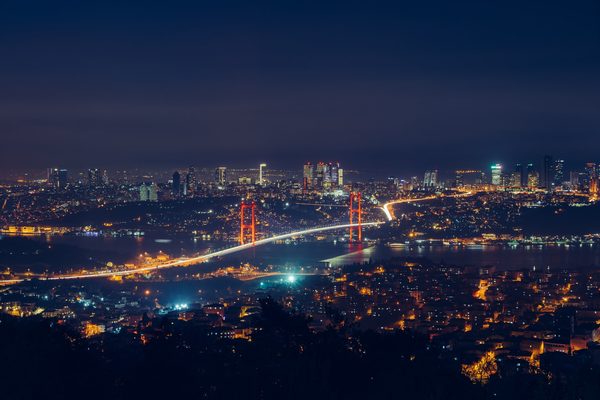
Light pollution isn’t something a budding astronomer thinks about too much before buying their first telescope, but it should really be the first thing you think about.
What you will be able to see with your telescope is directly determined by not the scope itself, but the clarity and transparency the sky above.
Read this article carefully, as light-pollution is a big deal and it should be considered carefully before laying down money for your scope purchase.
Can telescopes see through light pollution?
Yes and no.
Let me explain.
Depending on the target of your observation, light pollution might not be a big deal. The Moon and the planets aren’t affected much, as they are bright enough to outshine the noise generated by headlights and street lamps, sometimes even light clouds.
And for the budding astronomer, this is usually fine, as they often wonder what else there is to look at outside of these obvious choices.
When trying to find deep sky objects, such as galaxies or a faint nebula, the difference is obvious. Even a humble 80mm travel scope can reveal a bunch of these murky shadows of light under the right conditions, where as the biggest reflectors will still struggle around city lights.
What are Nebulae?
A nebula is a large field of dust and gas, usually ejected when a star dies. They can be some of the most beautiful things to look at, but they are also mysterious and ghostly. Probably how they got their name.
Galaxies are similar in nature, but usually a bit brighter. They handle magnification better than most nebulae, but they are very dim compared to bright stars and planets, and don’t give up much detail on the first glance.
Combined, these types of deep sky object make for some of the most rewarding observing sessions. Every time you turn back to them, they seem to give up a little more detail, and your brain gradually fills in the picture over time.
At one time, galaxies and nebulae were considered one and the same. The Bode Nebula is actually a galaxy, and not a nebula at all, but it keeps its former namesake in many catalogs and charts.
How Does Light Pollution Affect My View?
This is actually a multi-faceted question, but we’ll tackle the different angles here.
First, the obvious. Light shining upward from a city or any bright source will color the sky, much in the same way the sun does during the day.
Look at the sky during a full moon and again on a night with no moonlight. You will actually see some blueness in the sky. This is the same effect that happens when light is shining up into the sky from the local car lot.
When lots of light is traveling through miles and miles of atmosphere, enough of the light scatters around that it adds a glow to the night sky, and it is this glow that deep-sky objects must compete with for your view.
It’s pretty simple. DSOs (deep sky objects) are like little ghosts. They are transparent, dim, and most of them are too faint to show structure with a smaller scope. They’re like little glowing patches in the sky, especially at first glance. When the background sky is brighter, they simple vanish into the background.
Even the Great Nebula in Orion, which is incredibly bright, will only show the wispier parts of itself when it doesn’t have to compete with sky glow.
Another problem with really bad light pollution is that it can be difficult for your eyes to truly dark adapt. On a drive through Atlanta one winter, I noted that the combination of bright sky and snow on the ground made my midnight passing look like any deeply overcast winter day! Even though they were on, I didn’t need headlights to see my path.
Bright skies can also cause extra internal reflections inside of the telescope itself.
What to do About Light Pollution
There are a few ways to combat the problem of poor seeing due to light polluted skies.
First, get away from them. If you can get out of the city to a darker site for observing, that should be your go-to plan. In such a case, investing in a smaller scope is probably a good idea. Nobody wants to tote a 15-inch mirror around every time they go out to look at the stars.
If you are a little further out, light pollution filters can be helpful. Such filters target frequencies emitted by sodium vapor and other common halogens that most bright lights use. They do dim the overall view a bit, but they can really boost the contrast of fainter objects.
Even if you live out in the country, there are typically still bright lights around from neighboring towns, though the farther away you live from civilization, the better the skies.
All of that said, it is good to do a little research and find a nice dark site somewhere nearby that you can get to when the mood strikes, even if you aren’t using it for every observing session. Websites such as darkskyfinder.com (IOS App Download) can help you to find the darkest areas nearby. This tool was built base on work from David Lorenz, who created and published the 2016 light pollution maps for the entire world.
How Dark are My Skies?
There are a couple of features in the night sky that you can look for to tell you what you are working with, and it’s as simple as looking up on a clear night.
If you can only see a handful of stars, then expect dismal views. You can also expect that filters aren’t going to help much. You will be limited to planets, the moon, and some double-star spits or clusters, assuming you can find them. A good pair of binoculars will help to guide you around the sky in search of interesting targets.
If you see lots of stars, but the Milky Way isn’t really visible, then you can probably start looking for some of the brighter objects. Open clusters will look just fine, and other clusters will appear as little fuzzballs, but there may be some better resolution through larger scopes.
If you can see the Milky Way, you are getting there. Galaxies and brighter DSOs become more apparent and much easier to view. Filters can make a huge difference here with fishing out the details.
Darker skies will show the Milky Way sort of filled in, and quite beautiful on its own. Even the band that shows up in the winter will be obvious. After a minute or two of looking up, the sky will appear to glow with all the stars shining down, and you will be able to spot many targets with the naked eye, making it easier to train your scope on them.
Truly dark skies show not only outer space, but sometimes dust that surrounds our planet’s orbit. This dust appears as a spire of light toward the rising or setting sun, and is known as the Zodiacal Light. It can appear so bright in some cases as to become annoying if you are looking for an object near the light cone. You may also catch the milky way casting shadows on the ground.
A truly dark site is a wonderful treasure, and every astronomer should seek one out at some point. Under good conditions, a humble refractor like my ST80 will still show tons of stuff that it’ll never see from the burbs.